Cat Head Reference for Drawing
Turn a domestic cat skull to compare real cat face photos from similar angles.
Choose a cat head reference by angle
Pick a photo for the construction and a second for the ear pose or expression. The skull gives a stable orientation, and the photo shows the fur, pupils, whisker pads and ear shapes that determine the individual likeness.
Establish the round cranial mass
Place the eye sockets in relation to the short muzzle. From the front, note how the nose and whisker pads sit below the eyes. In a side view, study how quickly the nose projects from the face. Keep the bridge short in the initial drawing and leave room for the rounded mass behind the eyes. You can adjust the proportions once you have chosen the breed or individual you want to draw.
Adjust turn and tilt independently
A cat can face straight toward you and still have its head tipped down. Start with Front so you can locate both eyes, then tilt the model slightly to find a photograph with a comparable view of the forehead. Use a three-quarter angle to compare the near and far cheeks. When you need an image looking up at the cat, tilt in the opposite direction and check how much of the underside of the jaw is visible.
Read the ears and eyes from the photo
Use the full preview to check where the ears grow out of the head and how they pivot. The near ear can point toward the camera while the far ear pivots back. Draw both bases before placing the tips. Then locate the pupils inside the eyelids. Eye direction can shift independently of the head, so rely on the nose and cheeks to set the turn.
Three useful views of a cat face
Follow the front, turned and side examples to see which face shapes stay stable. Each example can load its approximate orientation into the tool.
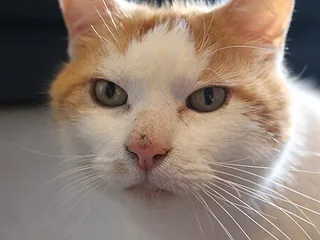
Front cat face
Mark a vertical line through the nose and a line through the corners of both eyes. Compare the two whisker pads on either side of the short muzzle. In a relaxed cat the ears may sit at different angles, which can change the outline without changing the orientation of the skull. Place the eye and nose shapes first and use the coat markings as a final check.
Luke Rogers · CC BY-SA 4.0 · Source photo
Load the front angle
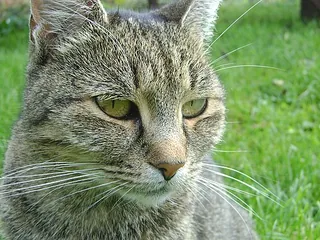
Three-quarter cat face
Trace the near cheek and compare it with the small piece of far cheek visible beneath the far eye. Follow the bridge to the nose and note where the far whisker pad overlaps the silhouette. If the far eye looks very narrow, use the angle of the lids and the placement of the brow instead of copying the full near eye shape.
MarioCRO · CC BY 3.0 · Source photo
Load the ¾ right angle
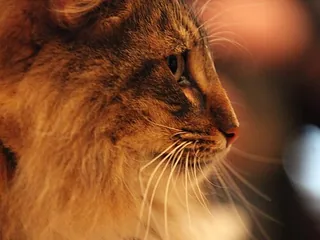
Cat side profile
Look at the transition from forehead to nose and how close the tip of the nose is to the eye. A long-haired cat can have a larger visible cheek and jaw contour. The inside of the near ear can open in a different direction from the eye, so copy the ear from the same photo when its pose matters to the drawing.
Pieter Lanser · CC BY 2.0 · Source photo
Load the right profile
Use matching photos to refine a cat study
The domestic cat collection includes short-haired, long-haired and Siamese examples. Turn and tilt determine the ordering. Coat length and breed shape also matter when you need a specific face, so browse the full group to choose between nearby results.
Separate the coat pattern from the form
Use the outer contour and shadow transition to decide where the cheek curves away. A stripe often crosses a plane instead of following its edge. A facial marking can also appear offset when the head turns. Draw the whisker pads, brow and cheek before attaching the markings to them.
Work from the frame when the crop is tight
The result crops are designed for scanning angle. Some crops place one ear or the neck near the edge. Open the full photograph and compare how the head sits on the shoulders. If you need to show both ear tips or the body posture, choose a wider view before you start a finished piece.
Match the subject when the nose looks unusual
Siamese faces and rounder long-haired faces can have very different profiles. Use the closest photo for the angle and compare an image of your intended subject to adjust the forehead and muzzle. Perspective, coat length and ear position can each make a single view read quite differently.
Sketch the cat with the ears in a different pose
Keep the skull at the turn you need and open two photos with similar head angles. On the first sketch, use the ear pose from the closer photograph. On the second, keep the eyes and nose in place and borrow the other ear pose. Check the bases where the ears attach before you draw their tips. This exercise helps separate ear movement from a change in the viewpoint.
Cat Head Reference FAQ
What is the easiest cat head reference to start with?
Try a front photo with both eye corners and both ear bases visible. Place these landmarks first, then draw the muzzle. Add a three-quarter study of the same features when you want to practice depth.
How can I find a cat looking up?
Tilt the skull so you can see more of the underside near the jaw. Compare the nearest results and choose a photograph where you can also see the landing point of the whiskers. Very steep tilts have fewer examples.
What is the best way to draw whiskers at an angle?
Place the whisker pads and their overlap before drawing individual hairs. Look for the roots in the photograph and let the whiskers fan outward from those areas. The far whiskers may disappear behind the nose or cheek.
Are the Siamese photos separate from the domestic cat set?
They are part of the domestic cat collection. Use Show all photos to locate them, or choose a profile preset to find the side examples. Their angles are ranked alongside the other cats.
How do I keep the photographs I want to revisit?
Open any photo and use Save photo. Saved only filters the current animal to those you kept, and the selections stay in your current browser.
How do I share the view with a drawing partner?
Choose Share this angle and copy the link. It recreates your animal and angle on this page. Send the original photo link from the preview if you want to share a specific file.
See model and photo credits